
A Journey Into the Villages, Traditions and Hands That Shape India’s Creative Soul
India has always been a land of stories, told through color, fabric, thread, wood and craft. When you hold a handblock printed tote bag, admire a patchwork wall hanging, or place a cotton rug in your home, you are holding much more than décor. You are holding a legacy, a cultural memory and the touch of a skilled artisan who has inherited their craft through generations.
This blog takes you behind the scenes into the courtyards, desert homes and small workshops where Indian handcrafted décor truly begins. It is an intimate look at the craft communities whose artistry inspires the world.
India’s Artisan Heritage: A Living Museum of Craft
India is home to more than seven million artisans. For many, craft is not simply work. It is identity, inherited knowledge and generational pride.
Craft skills here are passed down naturally. A grandmother teaches a child embroidery while telling stories. A father carves a wooden printing block for his son. Mothers gather around looms at dusk, weaving both fabric and family bonds. Tribal communities come together to stitch patchwork pieces as they sing folk songs.
Every region carries centuries of craft wisdom. And each tradition continues because artisans preserve what their ancestors once perfected.
1. The Block Printers of Rajasthan: Keepers of Ancient Printing Traditions
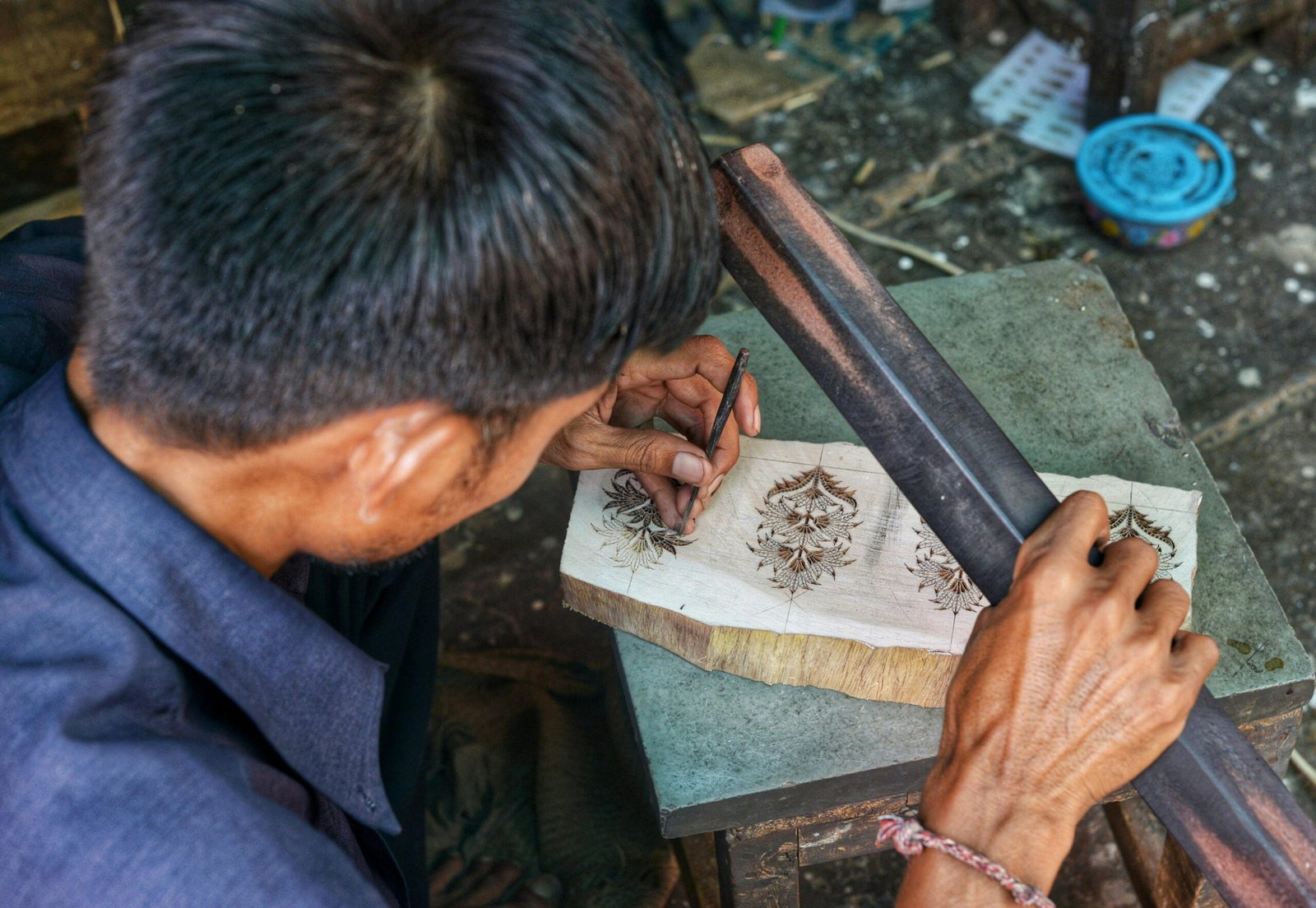
If you travel to Bagru, Sanganer or Barmer in Rajasthan, you will see long lengths of fabric drying under the sun, wooden blocks stacked neatly and artisans stamping cloth in rhythmic patterns.
Handblock printing here is a craft practiced with devotion.
How the Printing Process Works
- Artisans carve motifs on sheesham wood, often taking days to finish a single block.
- Natural dyes are prepared using indigo, turmeric, madder root, jaggery and pomegranate rinds.
- Each motif is stamped by hand with careful alignment.
- The printed fabric is washed, dried and finished in Rajasthan’s dry desert breeze.
Every print, whether floral, geometric or paisley, is a story preserved on fabric. The handblock printed bags and cushion covers you see today are continuations of this living tradition.
2. The Khambadiya Patchwork Artists: Masters of Color and Texture
Khambadiya or Kutchi patchwork comes from the nomadic communities of Gujarat and Rajasthan such as the Rabari, Meghwal, Ahir and Jat people.
This craft began as a way to reuse old garments, wedding clothes and leftover materials. Over time, it evolved into a celebrated folk art.
What Makes Khambadiya Unique
- Each patch is hand stitched with mirrors, beads and tribal motifs.
- No two pieces ever look alike.
- Colors, symbols and patterns carry cultural meaning.
- The work is detailed, slow and completely handmade.
Your patchwork wall hangings carry the spirit of this vibrant tribal heritage.
3. Embroidery Artisans: The Heart of India’s Needlework Traditions
Across Gujarat, Kutch, Rajasthan and Bengal, embroidery is a part of daily life. Women learn needlework from childhood and often stitch during community gatherings or festivals.
These artisans specialize in many techniques such as aari work, kantha, mirrorwork, soof embroidery and patchwork quilting.
Their Craft Appears In
- Decorative cushion covers
- Runners and table textiles
- Tribal wall hangings
- Festival décor items
Each stitch reflects emotion, belief and the visual language of the artisan’s surroundings.
4. Rug Weavers: Masters of Loom, Texture and Tradition
From desert villages in Rajasthan to weaving hubs in Uttar Pradesh, India’s rug makers create some of the finest cotton, wool, silk and jute rugs in the world.
How Handwoven Rugs Are Made
- Threads are dyed by hand with locally known techniques.
- Looms are set up manually.
- Patterns are woven line by line and knot by knot.
- Finishing touches like fringes and tassels are added by hand.
These rugs are long lasting, naturally colored and eco-friendly. The cotton silk rugs you offer come from artisans who have spent years mastering their looms.
5. Women Led Craft Communities: The Backbone of Indian Handicrafts
Indian handicrafts survive because women continue to keep these traditions alive. Throughout rural India, thousands of women’s groups produce hand stitched, hand printed and hand embroidered decor.
They create tote bags, runners, cushion covers, patchwork hangings and more. Income from these crafts provides independence, education for children and financial stability for families.
When you choose handcrafted pieces, you support these women and help sustain the traditional arts they preserve.
Why Supporting Artisans Matters
Choosing handcrafted décor is an investment in culture and people.
It Supports Livelihoods
Craft provides work for millions of rural families.
It Protects Traditional Skills
Many crafts face the risk of disappearing without support.
It Celebrates Slow Creation
Handcrafted work takes time and carries the maker’s presence in every detail.
It Adds Meaning to Your Home
Every handmade piece carries a story and a human connection.
It Encourages Sustainable Living
Handmade craft uses fewer resources and natural materials.
Conclusion: A Tribute to the Hands That Create Beauty
Every handcrafted product you bring home carries with it the laughter of artisans, the wisdom of elders, the creativity of generations and the pride of a community that continues to shape India’s artistic identity.
At Vanyug Arts, we honor these creators. Every product we share celebrates their imagination, their dedication and the cultural stories they keep alive.
Sources: