
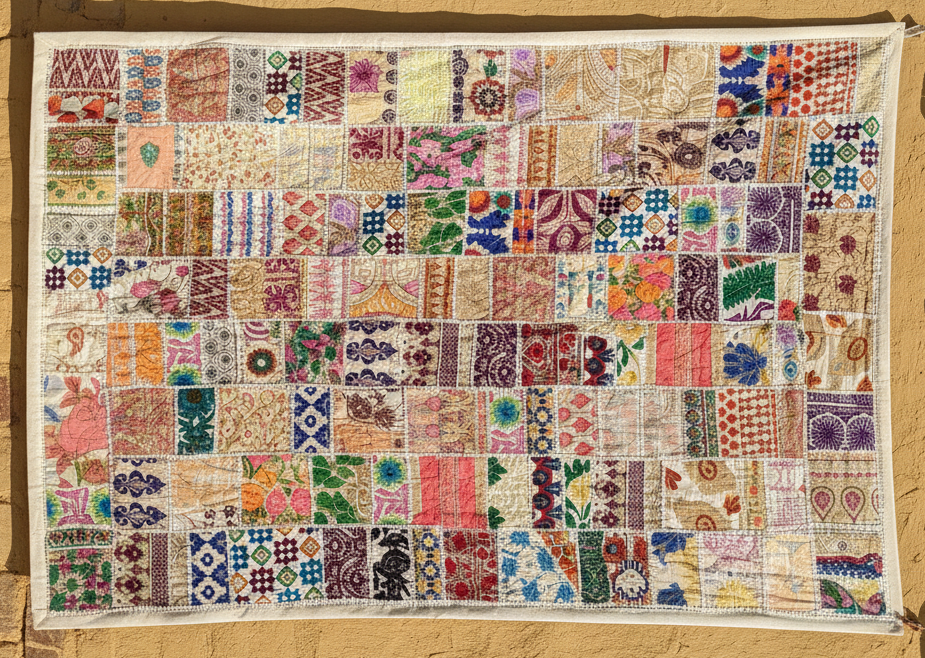
Khambadiya patchwork is one of India’s most vibrant textile traditions — a craft that blends cultural storytelling, sustainable practices, and breathtaking handwork. Today, it is a beloved global boho décor trend, often seen in homes across the US, Europe, Australia, and Japan. But behind its popularity lies a centuries-old history rooted in desert communities, nomadic tribes, and the art of giving old textiles a second life.
This blog explores the origin, evolution, and handcrafted process of Khambadiya patchwork, and traces its journey from rural huts to international home décor stores.
Origins: Khambadiya Begins in Kutch, Gujarat
While Khambadiya patchwork is now strongly associated with Rajasthan, its story begins in the Kutch region of Gujarat. Here, nomadic tribes such as the Rabari, Meghwal, Sodha, and Jat communities practiced a rich tradition of embroidery, mirror-work, quilting, and fabric upcycling.
Women in these communities repurposed old fabrics from:
- Ghagras
- Odhnis
- Shawls
- Bridal trousseau pieces
- Embroidered blouse scraps
These leftover textiles were stitched into functional items such as quilts, dowry bags, cholis, and household coverings. This patchwork technique, born from practicality and scarcity, slowly evolved into a striking folk-art tradition.
The term Khambadiya is believed to refer to the patchwork cloth used in nomadic dwellings, where scraps were carefully joined to create durable, decorative coverings.
How Khambadiya Traveled to Rajasthan
Although born in Kutch, Khambadiya patchwork took root in Rajasthan due to several cultural and historical connections.
Nomadic Movement Across Regions
Nomadic tribes traveled freely across Kutch, Barmer, Jaisalmer, and Jodhpur, carrying their embroidery styles with them. The desert belt forms a continuous cultural zone where textile traditions intermingle.
Shared Craft Heritage
Both Gujarat and Rajasthan share:
- Mirror work
- Appliqué
- Embroidery
- Strong color symbolism
This allowed Khambadiya to naturally blend with Rajasthan’s existing textile vocabulary.
Rise of Export Markets
From the 1960s onwards, Rajasthan became a major handicraft export hub. Traders began sourcing old embroidered textiles from border villages and transforming them into:
- Wall hangings
- Cushion covers
- Bedspreads
- Bags
- Table runners
This commercial shift expanded the craft dramatically, making Khambadiya a global boho décor favorite.
Today, Jodhpur, Barmer, and Jaisalmer are recognized as key clusters where Khambadiya patchwork is crafted by artisan collectives and women’s groups.
Characteristics of Authentic Khambadiya Patchwork
Khambadiya is instantly recognizable due to its bold mix of:
- Patchwork pieces
- Appliqué work
- Mirror work (shisha)
- Embroidery detailing
- Vivid color contrasts
- Upcycled fabric layers
A single piece may include fabrics as old as 20–40 years, making each item unique and unrepeatable.
Design styles used:
- Geometric patch layout
- Mosaic-inspired arrangements
- Floral borders
- Tribal embroidered motifs
The final look is eclectic, vibrant, and deeply cultural — a visual celebration of Indian craftsmanship.
The Traditional Process: How Khambadiya Patchwork Is Made
Khambadiya patchwork is entirely handcrafted, relying on the skill of artisans who preserve generational techniques.
1. Sourcing & Sorting Vintage Fabrics
Artisans collect old embroidered textiles from villages, tailors, and regional markets.
They sort them by:
- Color
- Motif
- Fabric condition
- Embroidery quality
Only strong, visually appealing patches are chosen.
2. Cutting the Patches
Patches are cut into shapes like squares, rectangles, or diamonds. Their irregularity adds to the charm and authenticity of the final product.
3. Designing the Layout
Artisans lay out the patches on a cotton canvas or velvet base, balancing colors and motifs to create a harmonious pattern.
4. Hand-Stitching
Each patch is hand-stitched using:
- Chain stitch
- Kantha stitch
- Blanket stitch
- Reinforced appliqué work
Mirrors, beads, and thread embellishments are added at this stage.
5. Backing & Finishing
Once the top patchwork layer is complete:
- A strong backing fabric is added
- Borders are attached
- Edges are secured
- Hanging loops may be stitched for wall art pieces
This results in a durable, heirloom-quality textile.
Why Khambadiya Patchwork Became a Global Trend
Several elements contributed to Khambadiya becoming an international décor favorite:
1. Sustainable & Zero-Waste Craft
Each piece is made from repurposed textiles, aligning perfectly with global eco-conscious living.
2. Boho Interior Trend
The bohemian interior movement in the US and Europe embraces textured, colorful, one-of-a-kind textiles.
3. Handmade Cultural Appeal
Buyers love items that tell a story — Khambadiya is a narrative textile, rich with history.
4. Unique, Never-Repeated Pieces
No two patchworks are identical, making each item exclusive and desirable.
5. Versatile Home Decor Uses
Khambadiya can be:
- Wall art
- Cushion covers
- Bed throws
- Table runners
- Rugs
- Bags
- Jackets
Its versatility keeps demand high.
Conclusion: A Living Heritage of Color and Craft
Khambadiya patchwork is more than a textile style — it is a legacy of women’s artistry, sustainable living, and cultural storytelling. What began in the desert belt of Gujarat has blossomed into a global craft that decor lovers cherish for its authenticity, vibrance, and soulful handmade aesthetic.
As the boho and sustainable décor trend continues to grow worldwide, Khambadiya patchwork stands as a beautiful reminder that old textiles, when touched by skilled hands, can become timeless art.